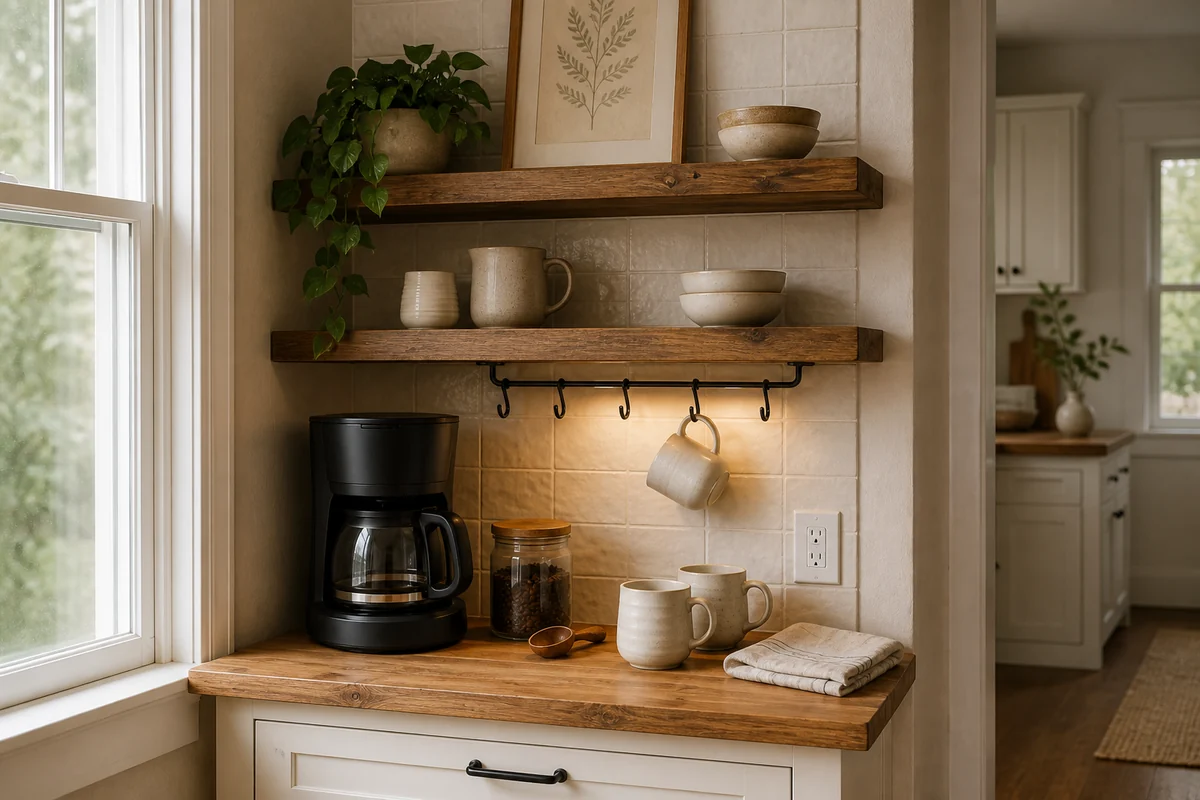
A small coffee bar does not need a separate cabinet, a cart, or a collection of signs. It needs one dependable place where the morning steps can happen without cups, filters, coffee, and spoons spreading across the kitchen.
The most useful version is closer to a work zone than a display. The brewer has breathing room. The mug is easy to reach. The coffee stays close to where it is measured. The few decorative pieces earn their space by making the corner feel settled rather than crowded.
If you have an unused stretch of counter, begin with the routine before the shelves. A cozy result comes from making the ordinary motion easier.
Start with the smallest complete coffee routine
Write down what you actually use on an ordinary weekday. For many households, the complete list is short: brewer, coffee, filter or reusable basket, scoop, one or two everyday mugs, and a towel for drips. Milk, sweeteners, travel lids, tea, and special cups can stay where they already live unless they are part of the daily route.
Place those essentials on the counter in the order your hands need them. Water and the brewer come first. Coffee and scoop sit beside the filter basket. Mugs belong within one step, not across the room. This simple left-to-right or right-to-left path is what makes the station feel calm at 6:30 in the morning.
Before adding anything, live with the outline for two or three mornings. If a piece keeps moving out of the way, it probably does not belong in the daily zone.
Measure the brewer before you style above it
A compact brewer can save counter width, but height and working clearance matter too. Measure the appliance with its lid fully open, then account for the space needed to lift out the basket, fill the reservoir, and remove the carafe without bumping a shelf.
Keep the machine on a stable, heat-resistant surface and follow its manual for clearance, cleaning, and electrical use. Avoid running an appliance cord across a sink, hot surface, or walkway. If the only way to power the setup is with a questionable extension cord, choose a different location and review the U.S. Consumer Product Safety Commission’s cord-safety guidance.
Elite Gourmet 5-Cup Brew & Drip Coffee Maker
This narrow 5-cup model uses a glass carafe, water-level window, reusable filter, and a simple illuminated switch. Its small batch and uncomplicated controls fit the everyday routine shown here.
Check before buying: measure the counter and open-lid height. This is a switch-operated model, so anyone who needs programmable brewing or automatic shutoff should choose a different machine.
Check current details on Amazon →Use-what-you-have option: move your current brewer onto a tray or washable mat and remove everything around it for a week. A defined footprint often improves the corner more than a new machine.
Use shelves for the room, not the whole collection
Open shelves make a small coffee corner feel intentional, but they work best when they are not asked to hold every mug in the house. Keep the lower shelf practical: perhaps two daily mugs, a small pitcher, or a bowl that catches tea bags and loose accessories. Let the higher shelf carry the quieter visual weight—a plant, one framed print, or a few bowls already used in the kitchen.
Heavy supplies belong lower and closer to the body. Anything rarely used can return to a closed cabinet. A shelf looks warmer when it has a little breathing room, and the counter works better when nothing has to be moved before making coffee.
If you rent or do not want to drill, skip new shelves. Clear one existing cabinet shelf and use the wall as empty space. The station can still feel complete.
Get everyday mugs off the work surface carefully
A short black rail can echo cabinet hardware and free a few inches of counter. It is useful only when the mugs hang without knocking into the backsplash, brewer, or one another.
Before mounting a rail, measure the wall or underside of the shelf, the mug-handle openings, and the drop from hook to counter. Use the mounting method and weight limits specified by the manufacturer, and choose appropriate anchors or structural support for the wall. Do not install a cup rack where a mug can swing into a hot appliance.
Mkono Wall-Mounted Mug Holder, Two Rails with Ten Hooks
Two black metal rails and removable S-hooks can move frequently used mugs off the counter while keeping them visible. The rails can be mounted on a wall or under an appropriate cabinet or shelf.
Check before buying: each rail is listed at about 16.7 inches long. Confirm the mounting surface, hardware, mug-handle fit, and swing clearance before drilling.
Check current details on Amazon →No-drill alternative: keep the two most-used mugs on a small washable tray beside the brewer and store the rest in a cabinet. This is often the better answer for renters or very shallow counters.
Keep coffee close without turning storage into decoration
A canister earns its place when it shortens the routine and protects what is inside. Choose one that is easy to open, comfortable to scoop from, and small enough that coffee is replenished rather than forgotten for months.
Glass makes the amount visible, but it is breakable and does not block light. If the corner receives strong sun, keep coffee in an opaque container or move a clear jar into a cabinet. A wood lid also needs to be kept dry according to its care instructions.
MOLADRI 28-Fl-Oz Glass Canister with Acacia-Wood Lid
This medium clear jar has a wide mouth, threaded wood lid, and sealing ring. It can keep a modest amount of coffee near the brewer without taking over the work surface.
Check before buying: glass can break, the clear body should stay out of direct sun, and the listed volume may not hold an entire bag of coffee. Compare the jar dimensions with the space and the package you usually buy.
Check current details on Amazon →Lower-cost alternative: keep coffee in its original package, press out excess air, close it securely, and place it in a dry cabinet near the station.
Add light only when the corner is genuinely dark
Warm under-shelf light can make an enclosed counter easier to use and give the tile a softer evening glow. Try the room’s existing light first. If your body casts a shadow over the scoop and reservoir, a focused light may solve a real problem.
A rechargeable motion-sensor bar can avoid new wiring, but it introduces charging and motion behavior. Mount it where it will not be hit by steam, water, or a rising coffee-maker lid, and follow the listing’s charging and placement directions.
MCGOR Rechargeable Motion-Sensor Light, Two-Pack
The magnetic 10-inch bars offer several brightness levels and can add focused light below a shelf without permanent wiring. One bar is usually enough to test whether the idea improves the corner.
Check before buying: it requires recharging, needs a suitable attachment surface, and motion behavior may not suit every routine. It is not a substitute for fixing unsafe wiring or poor general kitchen lighting.
Check current details on Amazon →Make it feel farmhouse without making it feel themed
The visual warmth in this corner comes from a few repeated materials: medium wood, cream pottery, black metal, and one living plant. You do not need signs, labels, or a matching accessory set.
- Repeat one wood tone on shelves or a small tray rather than mixing several orange and gray stains.
- Keep the pottery quiet. Two or three imperfect cream mugs add texture without filling the shelf.
- Use black as a line. Cabinet pulls, a mug rail, or the coffee maker can connect the corner without requiring more black objects.
- Leave one open area. Empty counter beside the carafe is working space, not a styling failure.
A thirty-minute setup using what you already have
- Remove everything from one short stretch of counter.
- Measure the brewer with its lid open and place it near a safe outlet.
- Put coffee, scoop, filter, and two daily mugs in the order they are used.
- Move backups and occasional supplies into a nearby cabinet.
- Wipe the backsplash and set down one small towel or tray for drips.
- Make coffee once and notice every extra step.
- Add storage or light only when that test reveals a real problem.
If the corner starts collecting unrelated mail, medicine, and keys, give those items a different landing place. The small-entryway guide can help with the things that arrive home, while the one-shelf pantry approach can hold coffee backups without turning the counter into inventory.
The destination is not a perfect mini café. It is a dependable corner that makes a rushed morning feel a little more settled and an unhurried cup feel worth sitting down for.
Product note: Product availability and details can change. Confirm dimensions, mounting requirements, care instructions, and current seller information on the listing before buying.