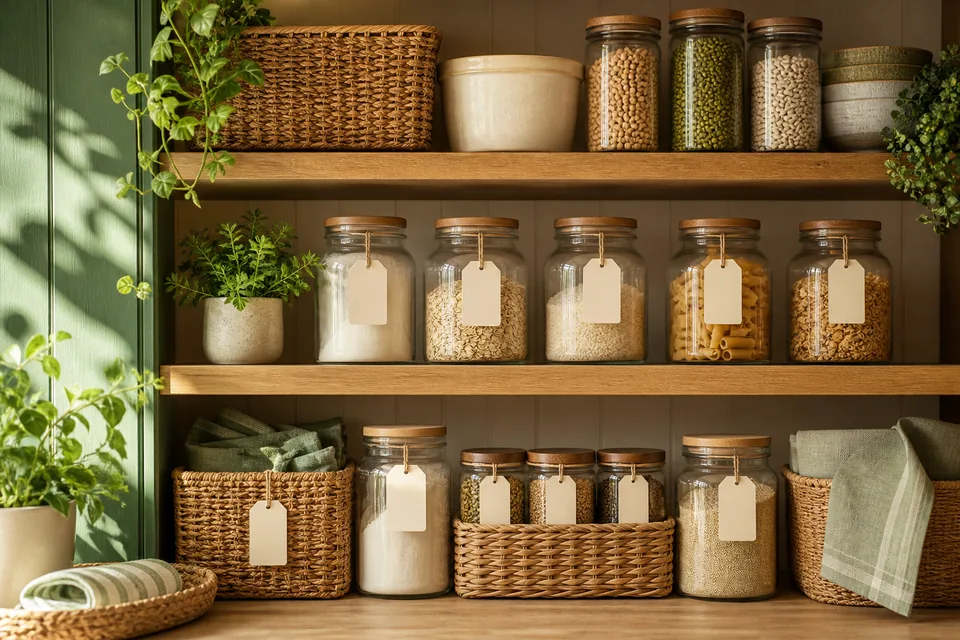
Most pantry organizing advice pictures an all-day project: everything out on the counter, categorized, labeled, photographed for before-and-afters. That version works great for a slow Saturday and fails immediately for anyone with a normal weekend. Here's a smaller version that targets the shelf that's actually causing the problem, not the whole pantry at once.
Start with one shelf, not the whole pantry
Pick the shelf that annoys you the most — perhaps it's the one with half-open bags of flour, sugar, rice, or cereal that are awkward to find and put away. Clear just that shelf, wipe it down, and set everything else aside for another weekend. Allow about ninety minutes as a planning window, not a deadline; a small shelf may need less and a crowded one may need more.
Choose containers for the way you restock
Clear containers can make it easier to see what is running low and give each staple a consistent place. Start with food-storage containers you already own; matching lids are not a requirement. If opening and refilling jars would add work you won't keep up with, clip the original bags closed and group them in an existing basket instead.
Measure the shelf and the amount you normally buy before ordering anything. A container's listed capacity does not mean a whole bag of flour or box of cereal will fit. Keep the original packaging information with decanted food, including its name, ingredients, storage directions, and date information.
ComSaf Glass Storage Containers with Bamboo Lids, 1.9 Qt, Set of 3
Best for: a one-shelf reset with three regularly used dry staples, such as oats, rice, or coffee. The listing describes square glass jars with bamboo lids and silicone sealing rings; the clear sides let you see what's left without opening each jar.
Check the fit: the listed dimensions are 3.9 by 3.9 by 9.7 inches per jar. Measure shelf height and allow room to lift the lid. Glass can break, and bamboo lids need separate care: the listing says the glass is dishwasher-safe, but the lids should be hand-washed and dried thoroughly. We have not hands-on tested the seals or capacity.
Skip the purchase if: your existing food-storage containers already work, you need lightweight shatter-resistant storage, or you want to keep full-size packages intact.
Check current details on Amazon →What to actually transfer first
- Oats, rice, or coffee you reach for often — a useful first test if your regular quantity fits the container and you prefer a scoop or pour.
- Flour, sugar, and cereal — measure the usual package amount first. Keep them in their original packaging if a jar would leave you managing awkward leftovers.
- Pasta and occasional ingredients — group the original packages together if decanting would make the shape or cooking instructions harder to manage.
Labeling that you'll actually maintain
Skip anything that requires a label maker session as a prerequisite. Pre-printed labels, or even a paint pen directly on the glass, remove the barrier that usually kills pantry projects at the labeling step. If a system needs special equipment to maintain, it won't survive the first restock.
Restocking without redoing the whole system
The actual test of a pantry reset isn't how it looks the day you finish — it's whether it still looks that way a month later. Keep the original bag or box for each staple somewhere nearby (a bin on a lower shelf works) so restocking is a five-second pour into the existing canister, not a project. Systems that require decanting into a new container every single grocery trip are the ones that quietly fail within a few weeks.