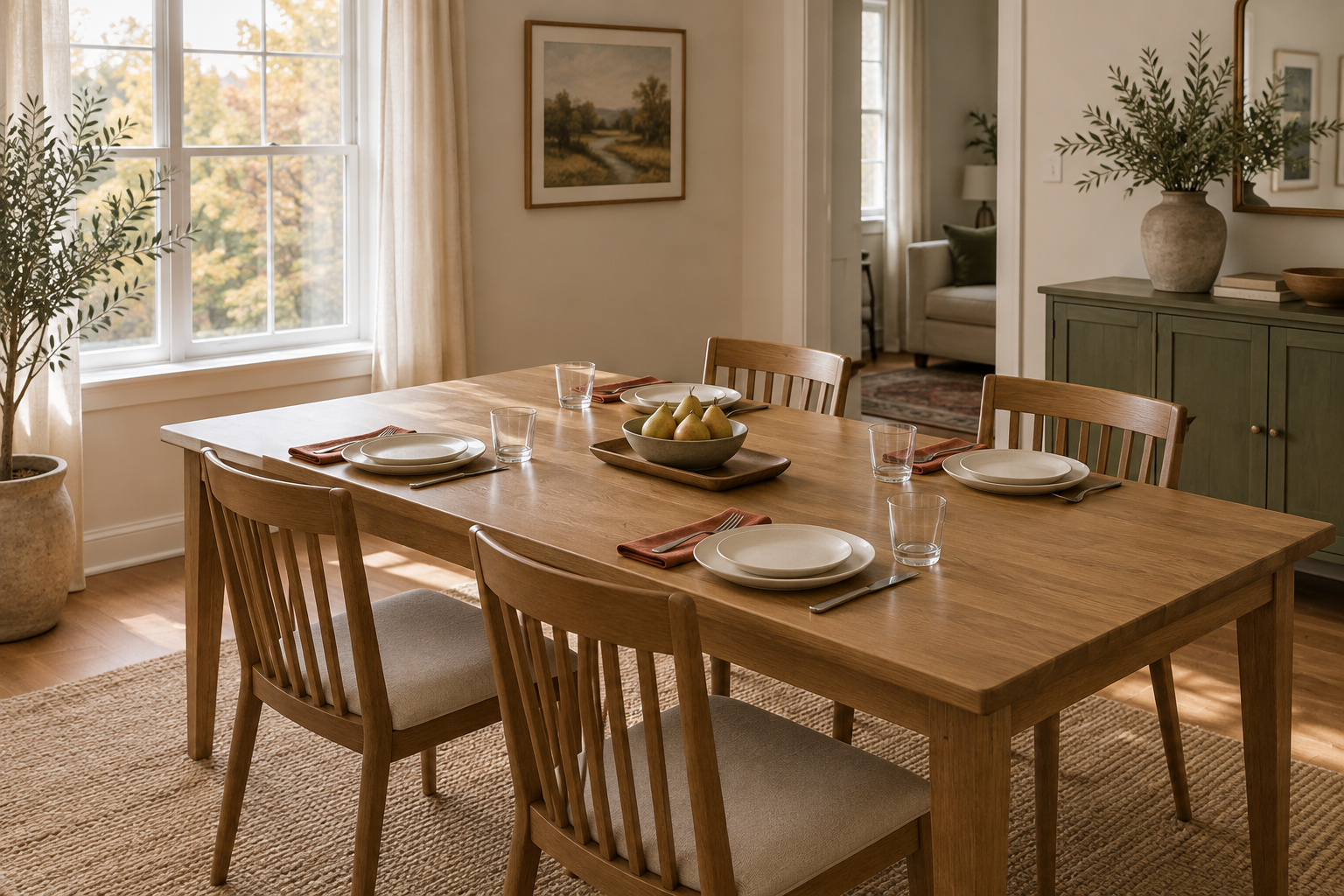
The table looks lovely until dinner arrives. Then the centerpiece needs another home, the glasses squeeze between decorations, and someone has to move a pumpkin before putting down a plate. Simple fall table decor can work the other way around: begin with the meal, then add the season.
This is not about owning a particular table or having a separate dining room. A kitchen table, a dining table, and the surface that becomes a workspace each morning can all feel welcoming. The useful question is what can stay without getting in the way—and where the rest can go.
Image note: The room scene is an original AI-generated styling concept, not a photograph of a real home or an exact product. The diagrams below are original layout sketches.
Choose the setup that fits your table
Put out the plates, glasses, and serving dishes you normally use. The space left over is your decorating space.
- Rectangular table: a low, narrow arrangement with breaks for shared dishes.
- Round table: one compact focal point, not a long arrangement squeezed into a circle.
- Table that also handles work: decor with a safe nearby landing place.
- Dinner or guests on the way: move the decor and make serving space first.
Start with a real place setting
Clear and wipe the surface. Set it for the number of people who usually eat there—not the number of chairs that could theoretically fit. Include cutlery, water glasses, and the largest dish you tend to share. Sit down, pull your chair in, and reach for the center as you would during dinner.
If a centerpiece forces a glass toward the edge or makes someone reach over another plate, shrink it or remove it. There is no single clearance measurement that works for every tabletop and dinner set. Testing the things you already use is more reliable than buying a centerpiece from a photograph.
No-buy starting point: your ordinary dishes, a low bowl, and cloth napkins you already like. The bowl can hold fruit you plan to eat. You do not need a new runner, matching chargers, and several decorative objects to announce the season.
For a rectangular table, keep the center low and narrow
Follow the table’s length without filling it from end to end. A small tray or shallow bowl can anchor the middle; the remaining gaps are useful space, not unfinished decorating. At a longer table, two small groups may work better than a continuous garland, provided your actual serving pieces still fit.
Keep height below seated sightlines so people can see one another. Try the arrangement from each chair, not only from the doorway. A runner is optional. If you already own one, lay it flat and check that it does not bunch beneath glassware or create something easily pulled from an edge.
Everyday version: one low bowl in the center, simple linens, and room around each setting. Serving version: move the decorative group to a stable nearby surface and use the center for shared dishes. A beautiful table does not need to stay decorated in exactly the same way through every meal.
For a round table, keep the focal point compact
Start with one low round bowl, or a small tray if you already have a suitable one. Its footprint matters more than matching the table perfectly. A large circular tray can be just as obstructive as a long arrangement. Place the plates first and let them define the remaining center.
Seasonal color can live around the edge in napkins or everyday dishes, leaving the center quieter. Avoid adding a second ring of ornaments around the bowl: that is often the space needed for glasses, hands, and shared food.
If the serving bowl takes the centerpiece’s place at dinner, that is the plan working—not a compromise. When the table is especially compact, skip the centerpiece entirely and let the place settings carry the color.
Put autumn color into things you use
Choose one direction from what is already in your cupboards. Warm cream and wood can feel quietly seasonal; rust with olive brings more color; burgundy against ordinary white dishes feels richer for an evening meal. These are starting combinations, not shopping lists.
Mixing existing napkins is fine when one color repeats. Fold them simply beside or on the plates instead of adding bulky napkin ornaments. If you prefer an almost bare table, a useful bowl of pears or apples can supply enough warmth without storing another box of seasonal decor.
Keep decorative foliage separate from food and away from heat. For a warm evening atmosphere, use the room’s lamps or pendant light. This guide does not depend on open flames among cloth and autumn leaves.
Give movable decor a real destination
A centerpiece is not easy to move if the only free surface is the floor. Choose its alternate home before arranging it: a stable sideboard, a clear shelf, or another suitable surface out of the way of daily traffic. Leave that landing place available.
A tray can contain a few small, stable items, but it is not a promise that everything can travel together. Move a water-filled vase, a slippery bowl, or an unbalanced object separately. Do not carry a loaded arrangement just because it looks grouped in a picture.
For work or homework, clear the dishes and decor, wipe the table, and give papers or supplies their own nearby storage. Return the seasonal group only if you want it back. Keeping the surface useful matters more than restoring a photograph-perfect scene every morning.
The serving-ready reset
- Move decoration first. Use the landing place you chose; move fragile or unstable pieces individually.
- Set out the serving pieces while empty. Check that each person still has a comfortable place and can reach shared food.
- Protect the surface properly. Use suitable trivets for hot dishes, following their instructions and your table’s care guidance. A napkin or ordinary decorative tray is not heat protection.
- Keep the extras nearby. Put spare glasses, extra napkins, and items that need not be on the table on a suitable side surface.
- Sit down once. Check sightlines, elbows, chair access, and whether anything must move before everyone can eat.
For guests, add the extra places before adding any extra decoration. If the tabletop cannot comfortably hold all the serving dishes, use an appropriate separate serving surface instead of compressing the place settings. Cozy hosting is partly the relief of having somewhere to put your plate.
Before buying anything, name the missing job
Need color? Use existing linens or dishes first. Need to contain small decorations? Try a tray or low bowl you own. Need heat protection? Use a suitable trivet, not another layer of decorative fabric. These are different jobs, not competing products to rank against one another.
Only add an item if it solves a gap you noticed while using the table. Check its footprint, materials, care instructions, and storage place. A set of six napkins is unnecessary if you already have enough; a beautiful tray is unhelpful if it consumes the serving space you just cleared.
An optional color layer: DII Pumpkin Spice cotton napkins
Best fit: someone who needs reusable dinner napkins and likes a casual autumn color. The selected set contains six 20-by-20-inch napkins in 100% cotton with a half-inch fringe. The color does a decorating job without adding another centerpiece.
Care and tradeoff: the listing says to wash cold separately, tumble dry low, remove before fully dry to minimize shrinkage, and use a low iron if needed. Cotton can wrinkle or shrink, and fringed edges need attention; skip these if you want a crisp, low-maintenance finish. We have not hands-on tested them.
Important: keep away from open flame and direct heat, as the listing warns. They are napkins, not trivets. Use your existing napkins first; you do not need new ones to follow any layout in this guide.
Check current napkin details on Amazon →Details reviewed September 21, 2026. Check the current selected color, size, seller, care, and availability before buying. The generated room image does not show this exact product.
The everyday fall-table checklist
- Everyone has room for their normal place setting.
- The focal point is low, modest, and optional.
- Seasonal color comes from useful pieces where possible.
- Decor has a safe place to go when dinner or work begins.
- Hot dishes have appropriate protection, separate from decorative linens.
- The table is easy to wipe and return to everyday use.
Try the setup through a few ordinary meals before buying anything. Notice what gets moved repeatedly. That object may belong on a sideboard—or may not need to be part of the table at all.
For the room around your table, explore cozy breakfast-nook ideas. To carry the same breathing room into shelves and other surfaces, read how to make a home feel collected, not cluttered. And if fall already feels like another shopping assignment, start with early fall without more decor.