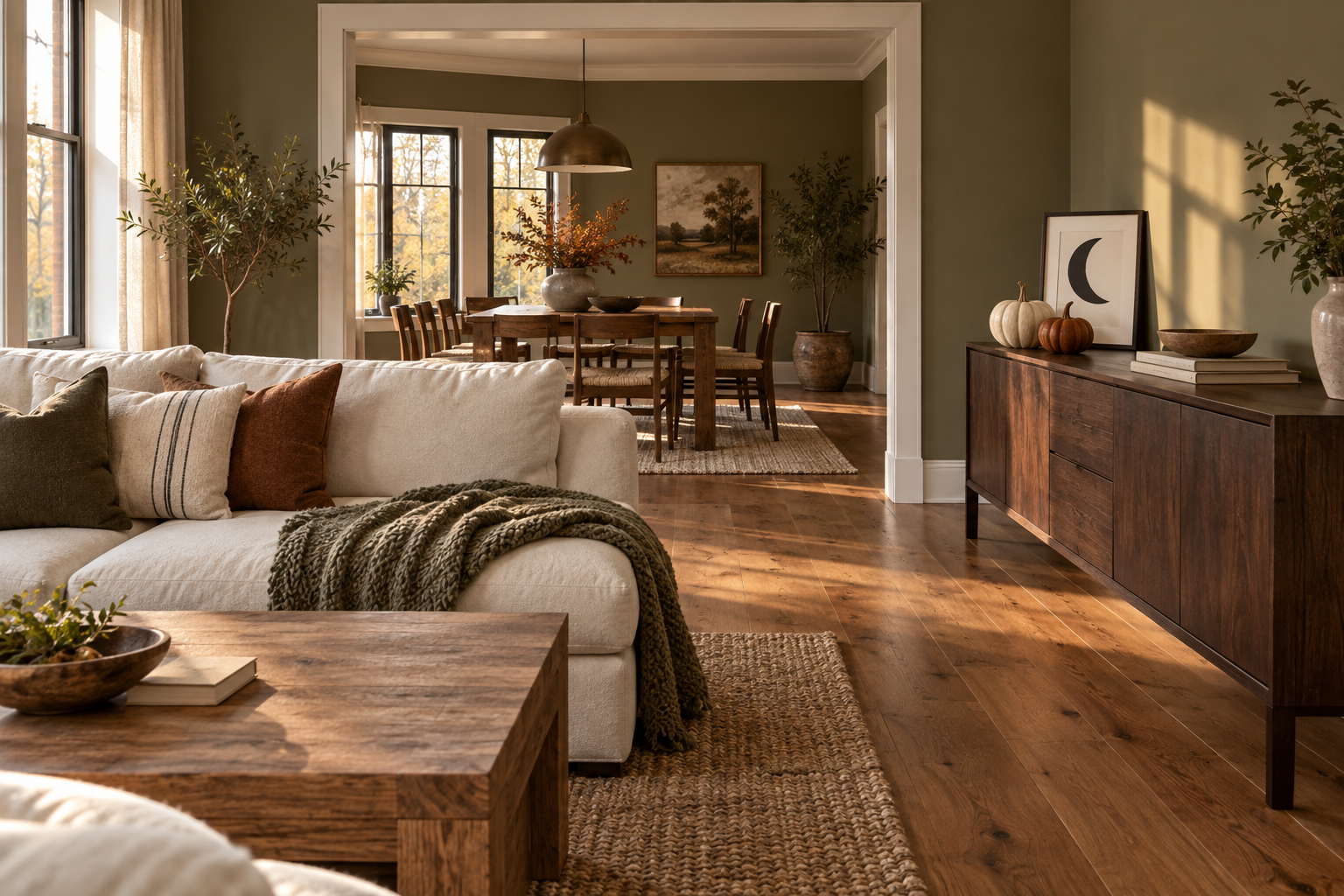
A pumpkin looks inviting on the console until it takes the place where everyone drops their keys. A paper display looks charming in the kitchen until making breakfast means moving it twice.
Indoor Halloween decor works better when it borrows a little space without taking over the room's job. Start with decorations you already own and one surface you can genuinely spare. A room can feel seasonal without dressing every shelf, window, and doorway.
The five settings below are alternatives, not five rooms to decorate. Pick the one that fits your home. If none offers a useful place, keep the display smaller or leave it out.
Choose the surface before the decorations
Look for a stable existing surface with spare space. An empty-looking spot may still be where someone opens a bag, sets down a plate, or reaches for a switch. Ask its regular users before claiming it for October.
Replace only optional decor, not daily essentials. Put that displaced ornament away first. Also choose where the Halloween pieces will go when the whole surface is needed: an available cupboard or their existing storage box, not a temporary pile on another working surface. If there is no place, choose a smaller display.
| Possible spot | Keep available | Swap or skip |
|---|---|---|
| Living-room console or shelf | Daily objects, controls, equipment ventilation and cabinet access. | Swap an ornament; skip this spot if equipment or everyday objects already fill it. |
| Kitchen or dining hutch | Frequently used dishes, handles and the working kitchen. | Replace a decorative piece on a separate shelf; skip shelves needed for dishes or near appliances. |
| Dining sideboard | Serving space and the doors or drawers used at meals. | Swap a display object at one end; skip the grouping if serving uses the whole top. |
| Entry console | Keys, bags, door movement and the route into the home. | Replace optional decor; skip this spot if keys or bags would lose their place. |
| Bookcase or office shelf | Books, work materials and access to the desk. | Swap a shelf ornament; skip the shelf if regularly retrieved books or folders must move. |
Five places to try, one at a time
Begin with one seasonal shape and something already doing a useful job. A reusable pumpkin and a tabletop frame may be enough. A simple paper silhouette can go inside an existing frame intended to stand on that surface; no wall attachment is needed.
The CPSC's Halloween guidance highlights fire risks around seasonal decorations and lighting. These examples use unlit, freestanding displays. Keep decorations away from heat sources and leave exits clear. Choose pieces appropriate for the people and pets using the room.
1. A living-room console that keeps its daily job
Choose one end of a console or a separate existing shelf. If media equipment shares it, keep decorations away from vents and leave all manufacturer-required clearances unchanged. Put a reusable pumpkin beside a tabletop frame holding a dark paper silhouette.
Keep daily objects in their usual places. From your seat, can you reach the book or remote and use any controls without moving the display? Open the cabinet too. If the surface is full, choose another location; when you need it clear, return the seasonal pieces to their preselected storage place.
2. A kitchen hutch that leaves breakfast alone
A hutch or dresser away from appliances, steam, splashes, and preparation space can carry the seasonal detail while counters keep their ordinary role. Try one flat paper shape in a tabletop frame beside a pumpkin brought out of storage.
Keep mugs and plates where their regular users expect them. Open the relevant door and lift out the dish you use most often. If the decoration has to be removed first, reduce it or choose another shelf. A kitchen without a separate hutch does not need a countertop substitute.
3. A dining sideboard that leaves the table usable
Give one end of the sideboard a small Halloween grouping and leave the dining table ready for meals, homework, or whatever happens there. Reuse a frame and two differently shaped pieces from your seasonal box; they need not match a new color scheme.
Before settling the arrangement, place the serving dish you normally bring to the sideboard. Open the drawer containing placemats or cutlery. If this is the household's only serving surface, a single framed paper cutout may work better than a cluster of objects.
4. An entry console where keys still land
The entry is a good place for a brief seasonal greeting because you pass it often. Keep the existing key dish or mail spot first, then consider a small decoration in the remaining space. Place the frame in its intended standing position on the stable surface.
Come through the doorway carrying your usual bag. Set down the keys, open the nearby door, and walk on. If a pumpkin takes the bag's landing place or sends belongings onto the floor, remove it. An entry without a spare surface can stay undecorated.
5. A bookcase that keeps the desk for work
Try a modest display on an existing bookcase shelf beside the workspace. A paper silhouette in a tabletop frame can give the corner a Halloween note without competing with the keyboard, papers, or equipment on the desk.
Keep frequently used books easy to lift out; do not pack them tightly around the frame to hold it upright. Check the view from the chair as well as the doorway. If you keep reaching around the decoration for a folder, use a less active shelf or put the piece away.
Sketch the display, the daily space, and the route
Think in three areas: a small decoration group on the surface, space for its everyday job, and the route in front. The first can shrink or disappear. The other two must keep working.
Original schematic, not to scale. These zones are prompts, not measurements or a furniture-placement guarantee.
You can sketch the same areas on scrap paper before moving anything. Leave space according to your actual routine and the furniture or equipment instructions, not the proportions in this diagram. Keep the furniture where it already works.
Try the ordinary-day test before adding more
Use the room normally with the first arrangement in place. Check it from a seated position and while moving through the space, and ask another household member to try their usual task.
- Can we put down the things that normally land here?
- Can we reach controls, dishes, books, and handles without moving decor?
- Do doors and drawers open as intended?
- Are the floor route, exits, and equipment clearances still unobstructed?
- Can the display come away easily when the surface needs its full space?
If an answer is no, remove one piece and try again. A smaller display is a useful result. You do not need to repair the arrangement by buying another organizer or moving the room's daily essentials elsewhere.
After a few ordinary uses, keep what still works. When October ends, return reusable pieces to their existing storage and paper pieces to a suitable flat place if worth keeping. Note the spot that worked, so next year's preparation starts with a familiar decision rather than a larger shopping list.
For related everyday decisions, try giving meaningful objects a clear place, making an entryway work, or leaving room on the fall table.