Late August creates an odd closet. The calendar is leaning toward fall, the afternoon still feels like summer, and every weather app seems to make a different promise. Packing away every warm-weather piece is premature. Leaving the whole season in place makes the first cool morning feel strangely difficult.
The answer is not a dramatic wardrobe overhaul. It is a gradual handoff. A few unmistakably summer things can leave, a small group of flexible pieces can stay, and the clothes you will soon want can move into sight before you urgently need them.
Follow your weather, not the retail calendar
Stores begin displaying sweaters long before many homes are ready to wear them. Your closet should respond to the climate you live in and the life you actually lead. Look at the next few weeks, not just today's date.
Start by identifying items with no realistic near-term job: vacation-only pieces after the trip is over, swimwear once swimming has ended, or clothing that already felt too hot, too tight, or too inconvenient all season. These are easier decisions than trying to judge every T-shirt and cardigan at once.
Make three small groups
- Still wearing: breathable basics and anything that layers well on a cool morning.
- Leaving soon: pieces that need one final wash, a repair, or a decision before storage.
- Ready to store: clean, fully dry clothing you know you will not need again this season.
Keep the groups physically separate while you work. A chair, bed corner, and open container are enough. The point is to prevent the uncertain pieces from quietly returning to the closet and recreating the same decision next weekend.
Wash before you store
Clothing can look clean while still holding body oils, fragrance, sunscreen, or a small unnoticed spot. Time makes those residues harder to address. Wash according to the care label, let everything dry completely, and repair loose buttons or tiny seams before the garment disappears for several months.
Fold with fewer, broader creases where the fabric allows. Do not compress delicate or structured clothing simply to fit one more item. If the container has to be forced closed, it is holding too much.
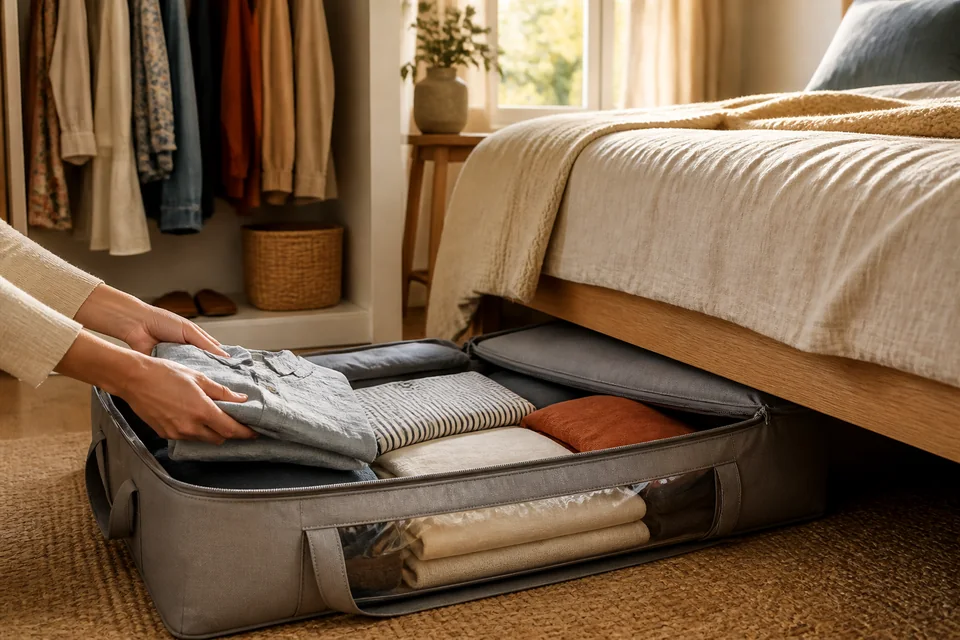
Amazon Basics Under-Bed Storage Bags with Clear Windows, Gray, 2-Pack
The low fabric format works for folded seasonal clothing without adding a bulky piece of furniture. The clear window and reinforced handles make it easier to identify and retrieve the contents without unpacking everything.
Check current details on Amazon →Store by the next moment, not by garment type
Instead of dividing everything into tops, bottoms, and accessories, group stored clothing around when you will want it again. A beach-and-pool group, a high-summer work group, and a warm-weather weekend group are often easier to unpack than a container where every category is mixed together.
Place the first things you will need nearest the opening. A light linen shirt may return before a swimsuit does. A clear window helps, but a simple paper inventory slipped inside the container is even more useful. Keep the note general enough to update: “summer linen, shorts, swimwear” is better than a long list that becomes inaccurate.
Create a bridge rail
Do not replace summer with the heaviest part of fall. Choose a small bridge collection: one cardigan, one light jacket, two breathable long-sleeve layers, and a few bottoms that work in both warm and cool weather. Put those pieces where your hand naturally reaches first.
This reduces the emotional weight of the change. You are not committing to cold weather. You are simply making the next kind of morning easier. The heavier layers can stay stored until your home and weather are ready for them.
Leave one honest gap
A closet feels calmer when the rail is not packed shoulder to shoulder. Resist filling the space you just created with new purchases. Live with the gap for a week. It will show you whether you truly need another layer or whether visibility was the thing you were missing.
If the bedroom itself is beginning its seasonal shift, pair this with the cold-weather sleep guide. Clothing and bedding do not have to change on the same day, but treating them as two parts of one gradual transition makes the room feel more intentional.
Summer does not leave all at once. Your closet does not need to either. Put away what is genuinely finished, keep the useful in-between pieces close, and let the next season arrive with enough empty space to be noticed.