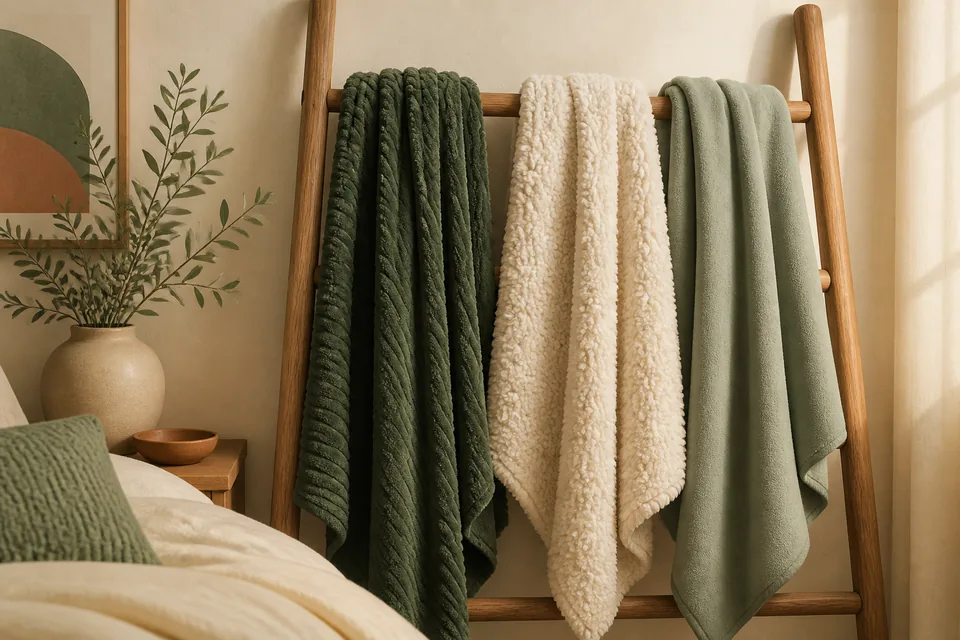
Chenille, sherpa and fleece describe familiar yarns or fabric finishes, but those names are not complete specifications. Throws sold under the same label can differ in fiber content, thickness, backing and care requirements. This is an editorial comparison checklist, not a hands-on warmth or durability test.
Chenille: compare the yarn and the finished blanket
Chenille describes a pile yarn, not a guarantee that a blanket is woven rather than knitted. Read how the specific throw is constructed and what fibers it contains. If you like a textured surface, compare close-up details and the return terms rather than assuming every chenille throw will feel or drape the same.
Check for model-specific shedding and care information. Do not assume repeated washing will cure shedding, or that the word chenille establishes a particular warmth level.
Sherpa: check both sides and the bulk
Read the specification for both sides of a sherpa-style throw: the complete construction matters more than the finish name. Compare the surface, backing, thickness, listed dimensions and how much space the folded throw would occupy.
If you want a substantial-feeling layer, inspect that particular blanket's construction. We have not measured these throws' insulation and cannot rank all sherpa blankets as warmer than all chenille or fleece blankets.
Fleece: check weight, finish and washing instructions
Fleece throws also vary in thickness, fiber blend and finish. Check the exact blanket rather than assuming fleece means the lowest price, fastest drying or least pilling.
For frequent washing, start with the maker's care instructions and the capacity of your laundry equipment. A label that fits your routine is more useful than a general claim that one fabric is always low-maintenance.
Compare the actual options
- Use: Is this for one person to use, an extra guest or display? Try a blanket you already own first.
- Fit: Read the measurements rather than relying on the word throw. Check both coverage and folded storage space.
- Feel: Compare the surface and backing. A photograph cannot establish how it will feel against your skin.
- Care: Check washing, drying and load requirements for that exact item.
- Returns: Confirm the current return window and conditions before buying something you cannot feel in person.
Follow the exact care label
There is no single washing or drying instruction for every chenille, sherpa or fleece throw. Follow the item label, including any restrictions on heat, softeners or drying. Do not wash or tumble-dry a blanket merely because another blanket with the same material name allows it.
If the blanket you own already meets the need, keep it. For a placement change rather than another purchase, see The Layered Throw Method.
Material terminology checked October 15, 2026: Cotton Incorporated's textile-yarn reference describes chenille yarn construction. It is not a warmth test, care instruction or endorsement of a retail throw.