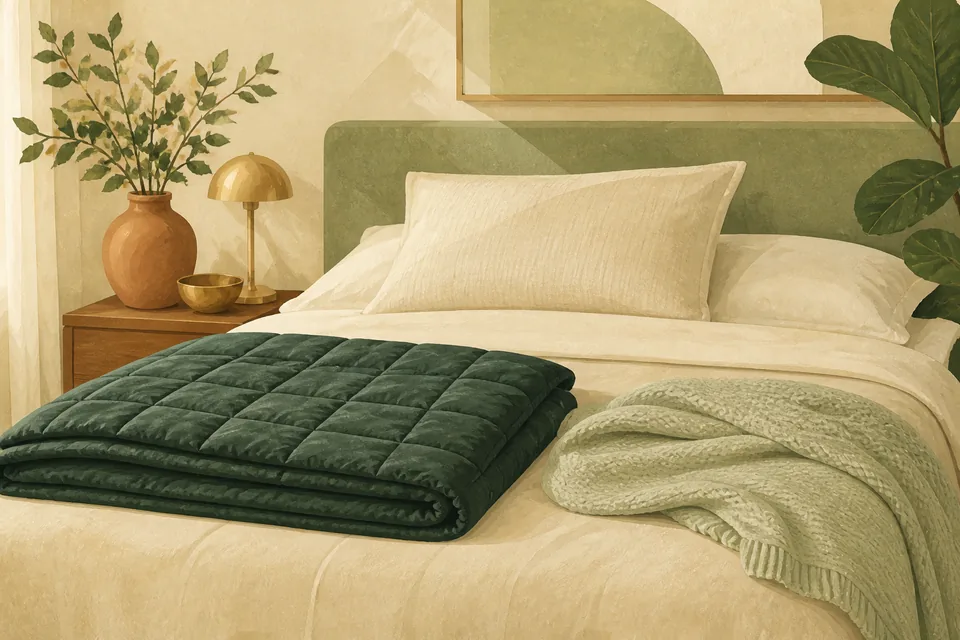
A weighted blanket adds heft to an ordinary blanket. Some people enjoy that feeling; others find it uncomfortable. Before buying one, it helps to look beyond the weight printed on the listing and decide whether this is something you actually want to use.
This guide is for adults considering a comfort purchase. It does not recommend a blanket as treatment for a sleep or anxiety condition.
Safety comes first
Never use a weighted blanket for an infant. The U.S. Consumer Product Safety Commission warns against weighted blankets and weighted swaddles for babies. (CPSC infant safe-sleep guidance)
For a child, speak with their clinician or occupational therapist rather than using an adult shopping guide. Somerset NHS guidance requires supervision and the ability to get free independently, and advises removing a child's blanket once they are asleep. (Somerset NHS pediatric guidance)
Before adult use, ask a clinician about conditions or medications affecting breathing, alertness, temperature control, skin health or movement. You must be able to remove the blanket yourself. Follow the exact model’s instructions. (RCOT guidance)
Do not wrap or restrain someone in a weighted blanket, and keep the head and neck uncovered. Stop using it if it feels too hot, causes distress or makes breathing difficult. These conservative precautions reflect occupational-therapy safety guidance; they do not make every product suitable for every person. (Somerset NHS pediatric guidance, Oxford Health pediatric precautions)
What about better sleep?
Research findings vary by the people studied and the blanket used. A trial in adults with particular psychiatric conditions found improvement in insomnia symptoms; a trial in autistic children found no improvement in measured sleep despite a preference for the weighted blanket. Those findings do not establish that a retail blanket will improve your sleep. (Adult insomnia trial, Autistic children’s sleep trial)
Choose it only if you want the physical feel. Persistent sleep problems or anxiety deserve a conversation with a healthcare professional.
How to approach weight and size
Do not choose from a universal body-weight chart. The familiar 10% figure reflects typical manufacturer guidance, not individual suitability. Check the exact product’s instructions; ask a clinician if unsure. (RCOT guidance)
Read actual measurements rather than relying on “queen” or “king” labels. RCOT advises no bedside overhang during nighttime use and removal once asleep. This guide does not recommend all-night use. (RCOT guidance)
Practical things worth comparing
- Fabric and texture: Read the fiber content for both the blanket and any separate cover. Consider what you already enjoy against your skin.
- Construction: Look for clear descriptions of the filling, padding and how the weight is contained. Inspect the seams and follow the maker's instructions if damage develops.
- Temperature claims: Look for product-specific evidence behind “cooling” language. A fill material or product name alone does not tell you how the complete blanket will feel.
- Washing: Check whether the blanket itself is washable or only its cover. Confirm that its care requirements fit your laundry setup.
- Handling and storage: Consider whether you can comfortably lift, carry and put it away.
- Returns: Check whether an opened or tried blanket can be returned, the deadline and any return shipping charges.
- Product notices: Check the exact brand and model against official recall information before use. (CPSC model-specific recall notice)
If you mainly want a softer layer for your chair or bed, try an ordinary throw you already own first. A weighted blanket is an optional comfort choice, and there is no need to keep using one you dislike.
Sources reviewed October 15, 2026. This editorial correction is not clinician approval, hands-on product testing or a recall finding about any previously linked product. No shopping recommendation is included pending separate exact-product verification. Additional context: 2024 systematic review; study populations and quality limit generalization.