Late-summer bedrooms can feel uncomfortable in a way that is difficult to name. The air may feel heavy even when the thermostat looks normal. Sheets seem less fresh. A closed closet holds onto yesterday’s air. The first instinct is often to shop for a machine that promises to fix it.
Start with a better question: what does “stuffy” mean in this room?
It can describe humidity, weak air circulation, damp towels or bedding, a blocked supply vent, dust, lingering fragrance, or a moisture source that needs attention. Those problems do not share one solution. A short check can keep you from buying equipment for the wrong one.
First, name the kind of discomfort
Stand in the room for a moment before turning anything on. Does the room feel warmer than the hallway? Does it smell closed-up after the door has been shut? Do fabrics feel damp, or is the air simply still? Is there condensation on a window or moisture near an exterior wall?
Write down what you notice and when it happens. A room that feels heavy only after a shower next door points to a different cause than a room that stays damp all day.
This is a household comfort check, not a diagnosis. Persistent odors, visible mold, repeated condensation, or signs of a leak deserve attention at their source.
Measure before you buy
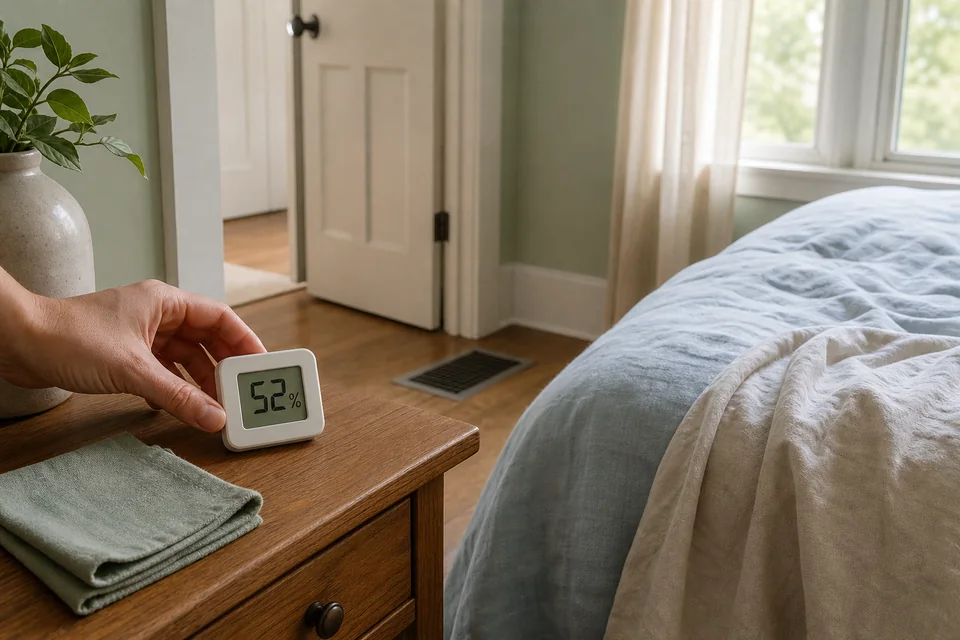
A small humidity gauge, also called a hygrometer, gives the room a number instead of another guess. Place it around normal living height, away from a window, direct sunlight, a bathroom door, and the immediate path of a supply vent. Give it time to settle, then check it at more than one point in the day.
The U.S. Environmental Protection Agency generally recommends keeping indoor relative humidity below 60%, ideally between 30% and 50%. One brief reading above that range after a shower or storm does not automatically mean you need a dehumidifier. A repeated pattern is more useful than a single moment.
If you do not own a gauge, borrow one if possible. The point is to learn whether moisture is actually the problem before choosing a moisture-control product.
TempPro TP50 Digital Hygrometer
This no-app tabletop or magnetic gauge shows temperature and relative humidity, refreshes its display every ten seconds, and records high and low readings. The listing states an accuracy of approximately ±2–3% RH and ±1°F under its specified conditions.
Keep in mind: placement and settling time affect a reading, and inexpensive gauges can disagree. This tool can identify a condition; it cannot locate or remove a moisture source.
Check current details on Amazon →Look for the room’s clues
Walk the edges of the bedroom and check the ordinary things that are easy to miss:
- Is a floor or wall vent covered by furniture, a rug, or laundry?
- Are damp towels, workout clothes, or air-dried laundry staying in the room?
- Is the bathroom exhaust fan being used during and after showers?
- Does the closet smell different when its door first opens?
- Is there recurring condensation, staining, peeling paint, or a water mark?
- Has the HVAC filter been checked according to the system manufacturer’s instructions?
The goal is not to hunt for disaster. It is to distinguish a room-use problem from a building or moisture problem.
Try the free fixes first
Remove damp textiles and let them dry somewhere appropriate. Uncover the supply and return vents. Open the interior bedroom door for a while if doing so safely helps air circulate through the home. Use kitchen and bathroom exhaust fans for the moisture those rooms create, and make sure they vent as intended.
Wash bedding if it has absorbed summer humidity, then let it dry completely before remaking the bed. Avoid masking the room with heavy fragrance; it can hide the clue you are trying to understand without changing the moisture or airflow.
Keep exterior windows closed when the outdoor air is hotter and more humid than the indoor air. On a genuinely cooler, drier day, brief ventilation may help—but the outdoor conditions matter.
Decide whether equipment is justified
If the gauge repeatedly reads above 60% after the simple causes have been addressed, moisture control may be useful. Start by looking for the source: a leak, an unvented bathroom, damp basement air, or an air-conditioning issue should not be covered up by a countertop gadget.
A dehumidifier can help in the right situation, but it adds noise, heat, energy use, filter care, and a water tank or drain line to manage. Room size, drainage, placement, and operating temperature all matter. That is a separate purchase decision—not the first step in this check.
Renters should document repeated moisture, stains, leaks, or visible growth and contact the property owner or manager. Homeowners may need an HVAC, plumbing, roofing, or indoor-environment professional depending on the source. Widespread visible mold or a recurring water problem is not a weekend decorating project.
The ten-minute bedroom air check
- Compare the room with the hallway.
- Remove damp fabric and uncover every vent.
- Look for condensation, staining, and water marks.
- Check relative humidity now and again later in the day.
- Try the no-cost airflow and laundry fixes.
- Act on a repeated pattern, not one uncomfortable hour.
A calmer bedroom sometimes begins with a purchase. More often, it begins with noticing the exact problem the room has been trying to show you.
Helpful source: EPA’s Care for Your Air guide. Reviewed August 24, 2026.